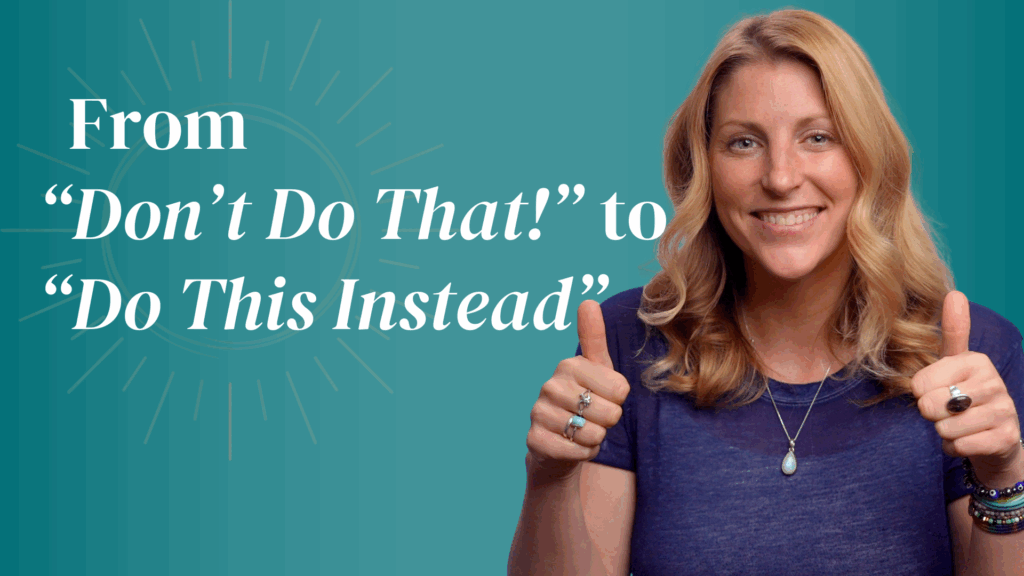
As parents, we all need to set boundaries. It’s part of keeping our kids safe and helping them grow.
But if you’ve ever felt like all you say is “No. Stop. Don’t.” and your child still doesn’t listen, you’re not alone. Those words are quick, but they can shut kids down, create power struggles, and chip away at the connection you have with them.
Hi, I’m Carly Schrimpl, Licensed Clinical Social Worker and owner of Power Within Child Therapists. I help children and teens learn how to communicate their needs, and I help parents guide them in a way that builds confidence instead of breaking them down.
Today, I want to show you how to say no without actually saying “No” and still keep the boundary in place.
When kids hear “No, Stop, Don’t” on repeat, their brain focuses on what they can’t do, not on what they can.
For many children, especially those with ADHD tendencies, hearing those words constantly can feel like they’re being shut down, not guided. It can trigger defensiveness, make them more likely to test the boundary again, or even worse, the words don’t even matter anymore.
The good news? You can set limits in a way that gives direction, keeps your authority, and still builds trust.
Here are four ways to keep your boundaries without the “No, Stop, Don’t” loop:
#1: Thank Them For Asking & Offer an Alternative.
Instead of: “No, we’re not doing that.”
Try: “Thanks for asking! Let’s do this instead.”
This shows you appreciate their request and immediately gives them a safe, acceptable option.
#2: Say Yes… For Later.
Instead of: “No, that’s not happening.”
Try: “Yes, we can do that another day. I’ll keep it on my list.”
This acknowledges their desire and leaves them feeling heard, even if they can’t have it right now.
#3: Show Them a Better Way To Do Something.
Instead of: “Don’t do that”
Try: “Try this way!” Or “this way is better” and then show them what to do.
You’re modeling how to do something appropriately.
#4: Acknowledge Their Feelings & Set the Limit.
Instead of: “Stop asking. You can’t have it.”
Try: “I get that you want it now, and it’s tough to wait. You’’ll get it once you learn how to wait better.”
You’re showing empathy while holding the boundary.
This approach works because it does three things at once:
- It keeps the boundary clear – Your child still knows the limit is there.
- It preserves connection – You’re validating their feelings instead of dismissing them.
- It teaches problem-solving – By offering an alternative or a timeline, you’re modeling flexibility.
Over time, this helps kids learn to handle disappointment and adapt. And these are critical life skills they’ll carry into adulthood.
Boundaries are essential, but how we communicate them can make the difference between a child who resists and a child who feels respected.
Next time you feel a “No, Stop, Don’t” on the tip of your tongue, try swapping it for one of these phrases. You might be surprised at how much smoother the interaction goes, and how much more connected you feel to your child.
If you’d like more tools and support in building a stronger connection with your child, I’d love to help. At Power Within Child Therapists, we specialize in helping kids and teens navigate big emotions, ADHD, anxiety, and life transitions, while guiding parents toward strategies that work.
Schedule an appointment with us today and start building the relationship, and the resilience, you both deserve.