If your child plays Minecraft, you’ve probably seen them disappear into a world of blocks, villagers, and endless creativity. And maybe you’ve wondered…
“What’s the big deal? It’s just a game, right?”
But here’s the truth:
Minecraft isn’t just a game, it’s an entire universe where your child can build, explore, and connect.
And understanding what’s happening inside that world can tell you a lot about what’s happening inside your child.
As a parent, it can feel confusing. Minecraft looks harmless, no violence, no scary themes, but suddenly your child is frustrated when it’s time to stop playing, or they’d rather build virtual worlds than connect with the real one.
You’re not alone. Many parents worry about what this game is doing to their child’s brain, attention span, and mood.
I’m Carly Schrimpl, Licensed Clinical Social Worker and Registered Play Therapist at Power Within Child Therapists. I help children and parents navigate screen time, emotional regulation, and connection in today’s digital world.
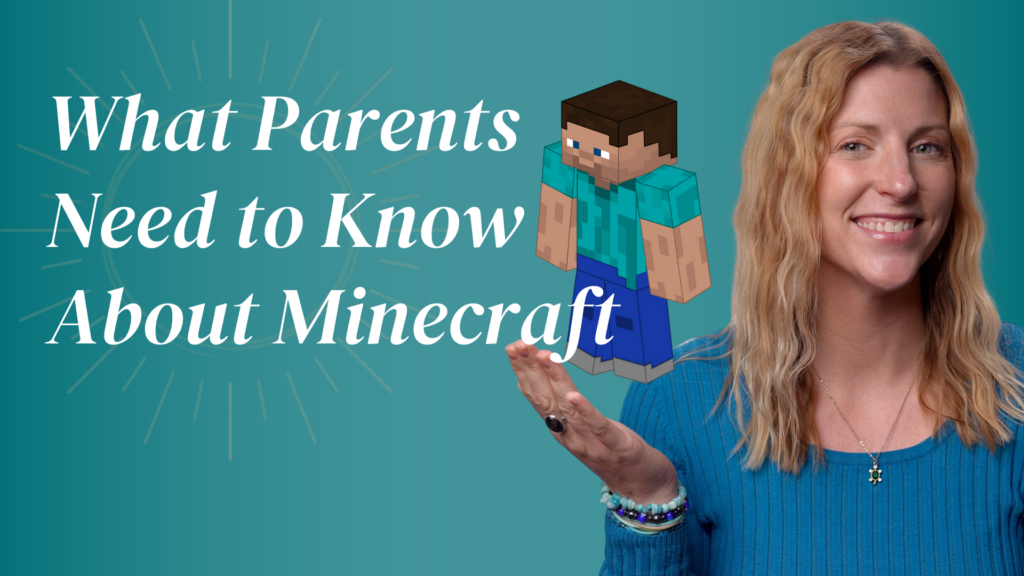
Let’s start with what Minecraft is. Minecraft is a sandbox game, which means there’s no one way to play. Kids can build elaborate worlds, craft tools, fight monsters, or explore with friends.
It can be played in different modes:
- Creative Mode lets kids build without limits. A dream for imaginative thinkers.
- Survival Mode challenges them to gather resources, plan, and manage danger.
- And Multiplayer Mode connects them with others online, which can be both amazing and risky.
So yes, Minecraft can be incredible for developing creativity, problem-solving, and even teamwork. But it can also be overstimulating, especially for kids who struggle with transitions, attention, or emotional regulation.
When kids get lost in Minecraft, their brains light up with dopamine, the “feel-good” chemical that says, “This is exciting! Do it again!”
So when you tell them it’s time to stop, their brain isn’t ready to let go. That’s not defiance. It’s dysregulation. And that’s where many of the power struggles begin.
Minecraft can absolutely be part of a healthy childhood, but it needs your guidance.
Here’s how to help your child thrive, not just survive, in Minecraft:
- Join their world. Ask to see what they’re building. You’ll learn how they think and what excites them, and it helps them feel seen.
- Set clear limits and transitions. Give a 10-minute and 5-minute warning before ending play. Visual timers or alarms can help their brain shift gears more smoothly.
- Keep play safe. In multiplayer mode, make sure servers are age-appropriate and private. Talk about online kindness and how to handle inappropriate language or behavior.
- Encourage real-world creativity. Bring their digital ideas offline. Build with Legos, draw their Minecraft house, or use play to connect.
When you understand what’s happening inside the game, you can see the strengths it’s building, imagination, persistence, and collaboration, without letting it take over your home life.
Minecraft doesn’t have to be a source of conflict. It can be a bridge between your child’s inner world and yours.
At Power Within Child Therapists, we help families find that balance between screens, emotions, and connection. If you find that you need additional support, don’t hesitate to schedule an appointment with us today.
Because when we guide with understanding, we don’t just manage screen time, we nurture the whole child.