“You should’ve said sorry.”
“You shouldn’t have done that.”
“You should do your homework.”
‘You should practice piano”
What are you noticing in yourself when I opened with that. Maybe your shoulders tighten. Maybe your stomach drops a little.
As you probably have just felt, Should is a small word with a BIG impact.
Most of us picked up “should” language without ever choosing it. We heard it growing up, so we say it now and we may not realize the impact that this small word has on ourselves and our children.
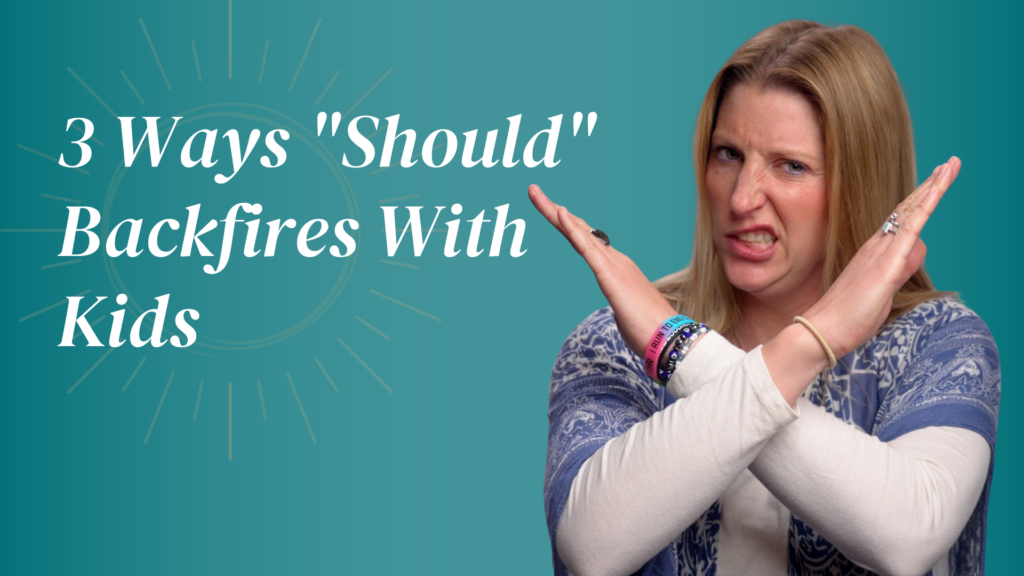
I’m Carly Schrimpl, owner and child therapist at Power Within Child Therapists. Today I want to show you why “should” causes more damage than most parents realize, and what’s actually happening inside your child when they hear it.
Here’s the thing about “should.” It points to something that didn’t happen. Or something that might not happen.
Either way, it argues with reality.
“You should’ve studied.” They didn’t.
“You shouldn’t have hit your brother.” They did.
And when we tell a child what they should or shouldn’t have done, shame usually shows up right behind it.
Here’s why that matters: when shame is present, learning stops. Shame doesn’t teach. It just makes kids feel small, even worthless at times and feeling small doesn’t help with growth.
Researcher Brené Brown describes a few common ways people respond when shame shows up.
Kids do the same three things.
#1: They can withdraw.
They go quiet. They head to their room. They stuff their feelings, eat them, or find some other way to bury what they’re feeling instead of working through it. This is a child disconnecting from themselves, and from you.
#2: They can move toward you by people-pleasing.
This looks like a “good kid” on the surface. But underneath, they’re abandoning their own feelings and opinions just to avoid more shame.
They’re not being themselves. They’re managing you and your feelings so that you are okay.
#3: They can move against you by placing the blame elsewhere.
This sounds like “Mom, I hate you.” The shame has to go somewhere, so it gets aimed back at the person who triggered it.
None of these three responses build connection. None of them teach a skill. They just protect the child from feeling something painful in the moment.
Here’s the part that’s easy to miss: “should” doesn’t just live in what we say out loud. It becomes internal dialogue.
“I shouldn’t have said that.”
“I shouldn’t have gotten that answer wrong.”
Once a child starts talking to themselves this way, they’re not just hearing shame from you, they’re generating it on their own. That’s a much harder pattern to unlearn later.
And none of it builds the thing we actually want for our kids: the ability to trust themselves, feel confident, and stay connected to who they are, especially when life gets hard, because it will.
Relearning a new skill even if it is just avoiding the word should is tough. We at Power within know that you are doing the best that you can with what you have and what you have learned.
If you’d like more support in reducing “should” in your parenting, building healthier communication patterns with your child, schedule an appointment at Power Within today. We’re here to help.